

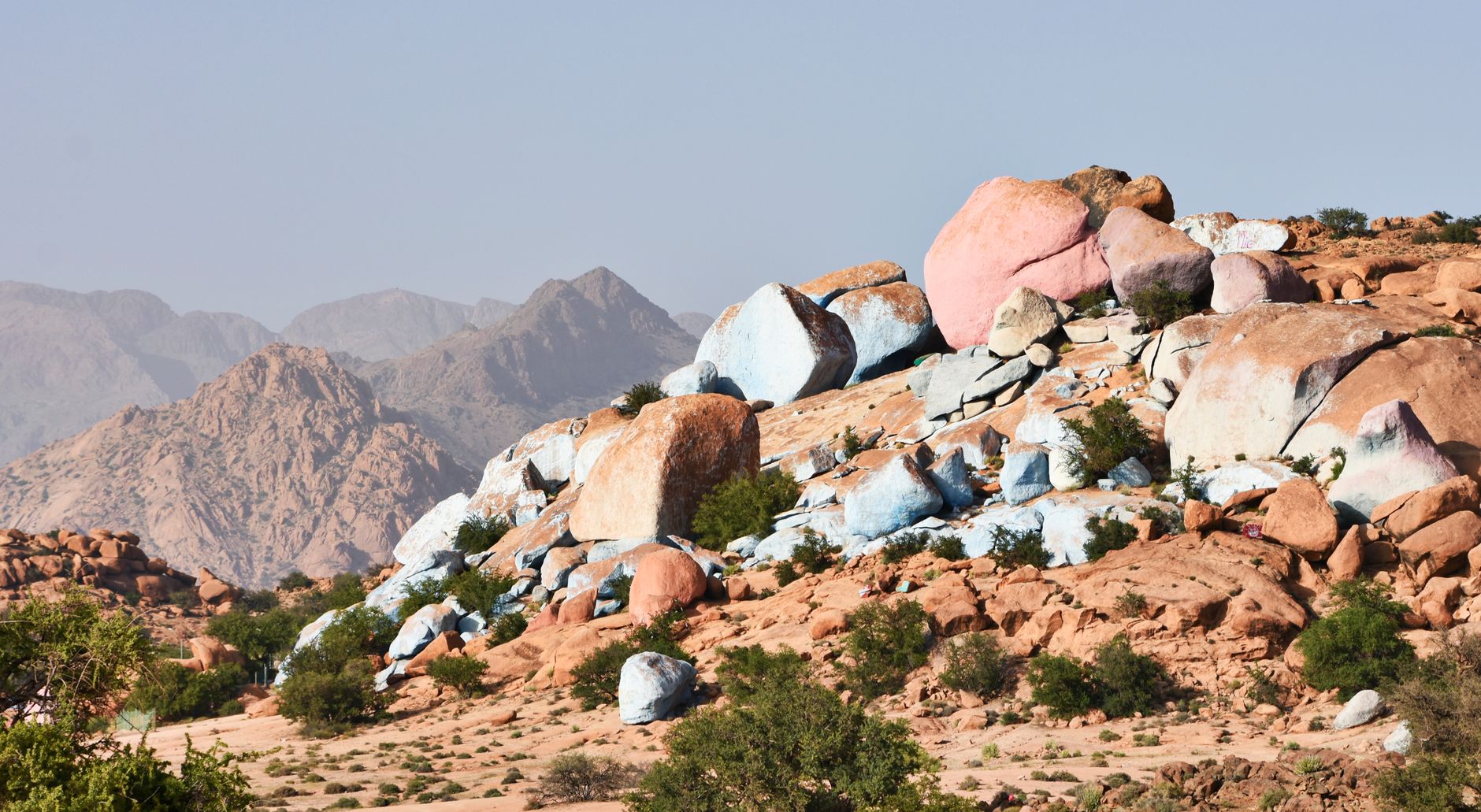
The Sahara Desert pink rock is a remarkable discovery that has been determined to be a 4.1 billion-year-old piece of Mars. This exciting finding opens up new avenues for understanding our solar system’s history.
What is the Sahara Desert pink rock?
The Sahara Desert pink rock is a recently discovered geological specimen that has captured the attention of scientists around the world. This intriguing rock formation, found in the vast expanse of the Sahara Desert, has been determined to be a 4.1 billion-year-old fragment that originated from Mars. The significance of this discovery lies not only in its age but also in the insights it provides about the early solar system and the geological processes that shaped both planets.
Upon examination, researchers identified that the pink rock exhibits unique mineralogical characteristics, which align closely with Martian meteorites previously uncovered on Earth. This connection suggests that the Sahara Desert pink rock could be a remnant of the same ancient volcanic activity found on Mars, offering a rare glimpse into the planet’s history.
Scientists utilized advanced analytical techniques, including mass spectrometry and electron microscopy, to study the rock’s composition. Their findings revealed a complex interplay of minerals that are consistent with those found in Martian rocks. The implications of this discovery are profound, as they challenge our understanding of planetary formation and the potential for life beyond Earth.
As researchers continue to analyze the Sahara Desert pink rock, they hope to uncover more about the environmental conditions on early Mars and how they compare to those on our own planet.
How was the rock dated?
The dating of the Sahara Desert pink rock involved a combination of advanced techniques that provided a clearer picture of its origin. Researchers utilized radiometric dating, a method that measures the decay of isotopes within the rock to establish its age. This technique is particularly effective for dating ancient materials and was crucial in determining that the rock is approximately 4.1 billion years old.
In addition to radiometric dating, scientists employed geochemical analysis to examine the rock’s mineral composition. This analysis revealed specific elements and isotopes that are consistent with Martian geology, further supporting the hypothesis of its extraterrestrial origin. Notably, isotopes of oxygen and strontium found within the rock matched those typically found in Martian samples collected by previous missions.
Moreover, researchers conducted comparative studies with meteorites that are known to have originated from Mars, which provided additional insights into the pink rock’s characteristics. These meteorites exhibit similar physical and chemical properties, reinforcing the connection between the Sahara Desert pink rock and the Red Planet.
The culmination of these methods not only confirms the rock’s ancient age but also highlights the intriguing link between Earth and Mars, suggesting that the Sahara Desert pink rock could be a remnant from a time when both planets shared a more connected history.
Significance of the Mars connection
The revelation that the Sahara Desert pink rock is a 4.1 billion-year-old piece of Mars has significant implications for our understanding of planetary history and the potential for life beyond Earth. This connection between the Sahara Desert and Mars offers a unique opportunity to study the geological processes that have shaped both planets over billions of years.
Researchers emphasize that the pink rock not only provides insights into the early conditions on Mars but also helps to shed light on the similarities and differences between terrestrial and Martian geology. By analyzing the mineral composition and isotopic signatures of the rock, scientists can draw parallels between the two worlds, which may enhance our understanding of how planets evolve.
Furthermore, the existence of this pink rock raises intriguing questions about the potential for life on Mars. If ancient Mars had environments similar to those found on Earth, it opens the door to the possibility that life could have existed there. This connection fuels ongoing discussions in astrobiology and planetary science.
In addition, studying the Sahara Desert pink rock may pave the way for future missions to Mars. Understanding the composition of Martian materials on Earth can inform strategies for exploring the Red Planet, ultimately contributing to humanity’s quest to answer the age-old question: Are we alone in the universe?
Scientific methods used in the study
In the recent study of the Sahara Desert pink rock, researchers employed a variety of scientific methods to establish its origins and age. These techniques were crucial in determining the rock’s connection to Mars, as well as its significance in understanding planetary formation.
- Isotope Analysis: Scientists conducted isotope ratio mass spectrometry to analyze the elemental composition of the rock. This method allowed them to compare the isotopic signatures with those found in Martian meteorites, reinforcing the hypothesis that the pink rock originated from Mars.
- Radiometric Dating: Using uranium-lead dating, researchers were able to determine that the rock is approximately 4.1 billion years old. This dating technique is vital for establishing a timeline of planetary evolution and understanding the early solar system.
- Mineralogical Studies: Detailed mineralogical analysis was performed using scanning electron microscopy, which helped identify specific minerals that are characteristic of Martian geology. Such findings further supported the connection between the Sahara Desert pink rock and the Red Planet.
- Geochemical Testing: By conducting geochemical tests, scientists evaluated the presence of various elements and compounds, which were compared to existing data from Mars rovers and landers.
These methods collectively provided robust evidence for the claim that this intriguing pink rock is not just a terrestrial curiosity but a remnant of ancient Martian history.
Reactions from the scientific community
Reactions from the scientific community regarding the recent discovery of the Sahara Desert pink rock have been overwhelmingly positive, sparking excitement and curiosity among researchers and planetary scientists alike.
Dr. Emily Carter, a geologist at the National Space Institute, stated, “The implications of finding a piece of Mars on Earth are profound. This Sahara Desert pink rock not only enhances our understanding of Martian geology but also raises intriguing questions about the planet’s history and potential for life.”
Meanwhile, Dr. Ahmed El-Sayed, an astrobiologist, emphasized the importance of the findings by saying, “This rock could provide invaluable insights into the conditions that existed on Mars billions of years ago. Understanding its composition and age can help us piece together the puzzle of our neighboring planet.”
Many scientists are now eager to conduct further studies on the Sahara Desert pink rock, hoping to uncover more secrets hidden within its ancient layers. Dr. Lisa Tran, a planetary scientist, noted, “Every discovery like this opens up a new avenue for exploration, and we are just scratching the surface.”
As the research community delves deeper into the implications of this find, collaboration among various scientific disciplines is expected to intensify, potentially leading to groundbreaking revelations about both Mars and the early solar system.
Future implications for Mars exploration
The discovery of the Sahara Desert pink rock opens new avenues for understanding planetary formation and the potential for life beyond Earth. As scientists continue to investigate the rock’s properties, its implications for Mars exploration could be profound.
One significant implication is the potential for similar rocks to exist on Mars, which could provide further insights into the planet’s early conditions. If future missions can locate and analyze comparable geological samples, it may help unravel the history of water presence and climate evolution on Mars.
- Sample collection missions: Future Mars missions could prioritize regions where pink rocks or similar geological formations are found, enhancing our understanding of Martian geology.
- Astrobiological studies: Investigating these rocks might reveal signs of ancient microbial life, thereby addressing the critical question of whether life ever existed on Mars.
- Comparative planetology: The similarities between the Sahara Desert pink rock and Martian materials could allow scientists to draw parallels between the two planets, enriching our knowledge of their respective histories.
As we look to the stars and plan ambitious missions to Mars, the Sahara Desert pink rock serves as a reminder of our interconnected planetary history. This ancient relic may not only rewrite chapters of Mars’s past but also guide our future explorations.
Comparisons to other space findings
The discovery of the Sahara Desert pink rock has prompted comparisons to other notable space findings that hint at the interconnectedness of celestial bodies within our solar system. Scientists have long studied meteorites that originate from Mars, providing invaluable insights into the planet’s geology, atmosphere, and potential for life.
One of the most significant examples is the Allan Hills 84001 meteorite, which was found in Antarctica and is believed to be around 4.0 billion years old. This rock has sparked debate over the possibility of ancient microbial life on Mars, much like the discussions surrounding the Sahara Desert pink rock. Both findings highlight the ancient history shared between Earth and Mars, raising questions about planetary formation and the conditions that may have supported life.
Additionally, the recent analysis of the pink rock has drawn parallels to the findings of the Martian surface, particularly the presence of minerals that are also found in the Martian soil. The similarities in composition are striking, suggesting that Earth and Mars may have shared environmental conditions during their formative years.
- Allan Hills 84001: A key Martian meteorite linked to microbial life debates.
- Martian Soil Studies: Insights into similar mineral compositions.
- Planetary Formation: Understanding shared histories of Earth and Mars.
As research continues, the Sahara Desert pink rock may provide further evidence of the intricate connections that exist beyond our planet.
Conclusion and next steps in research
In conclusion, the discovery of the Sahara Desert pink rock as a fragment dating back 4.1 billion years offers profound implications for our understanding of Mars and its geological history. The extensive research conducted has not only confirmed its Martian origin but has also paved the way for further exploration and investigation. Scientists are now tasked with exploring the broader significance of this finding, especially in relation to the potential for past life on Mars.
Next steps in research will involve a multi-faceted approach. Firstly, researchers plan to conduct more detailed isotopic analyses to gain deeper insights into the rock’s composition and formation processes. This can help establish a clearer timeline of Mars’ environmental conditions during its early history.
Additionally, teams will focus on comparing the Sahara Desert pink rock with other Martian samples collected by rovers and landers. Such comparisons could reveal patterns and variations across different regions of Mars, enhancing our understanding of its geological diversity.
Collaboration among international space agencies and research institutions will be crucial in the coming years. By pooling resources and expertise, the scientific community aims to develop innovative technologies to study Martian materials further. The Sahara Desert pink rock serves as an exciting bridge between Earth and Mars, fueling curiosity and ambition for future missions to explore our neighboring planet.
Photo by Tom D’Arby on Pexels